
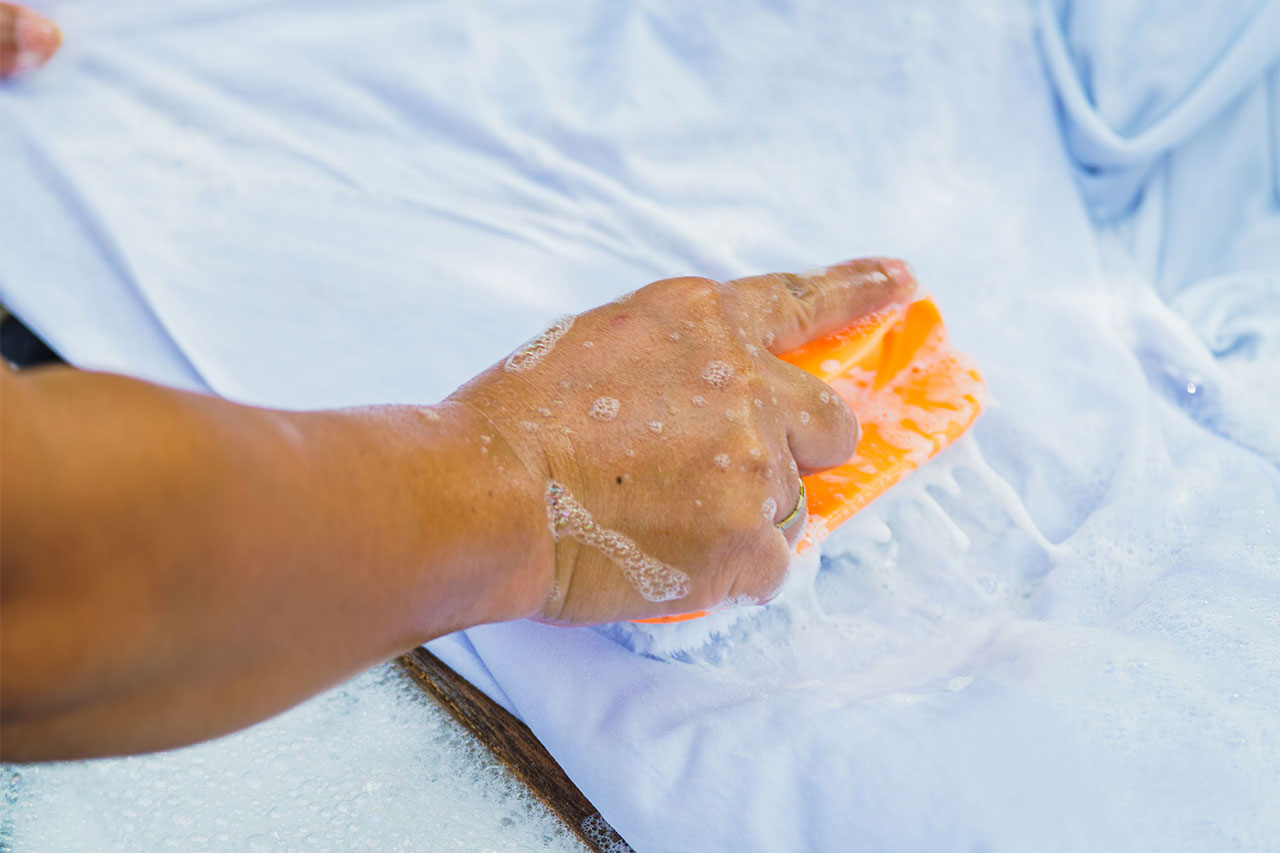
Most futon covers should be spot cleaned or dry cleaned, not machine washed. Cotton and cotton-blend covers, and anything in a heavier upholstery-weight fabric, are dry clean or spot clean. A narrower set — polyester-based collections such as Medley linen texture and Ibiza suede texture — can be machine washed in cold water on a gentle cycle and line dried.
Check the individual product listing and the care tag sewn into your cover before you clean it. That tag is specific to the fabric you own and overrides every general rule below.
Covers can shrink if put through a washing machine. That’s the risk this article exists to help you avoid.
Care method by fabric family
| Fabric family | Method |
|---|---|
| Cotton-blend (cotton/polyester) | Dry clean or spot clean |
| 100% cotton | Dry clean or spot clean |
| Heavier upholstery-weight fabrics | Dry clean only |
| Polyester-based collections (Medley linen texture, Ibiza suede texture) | Machine wash cold, gentle cycle, line dry |
This is a guide to the general pattern, not a substitute for the tag. Fabrics within the same visual family can differ, and construction details — piping, backing, trim — sometimes change the recommendation for an individual cover. Read the listing.
Why most futon covers aren’t machine washable
Surface area. A full-size futon cover is a very large piece of fabric. A shrink rate small enough to be invisible on a shirt takes better than an inch off a 75-inch length.
Fit tolerance. A cover is cut to encase a specific mattress with very little slack. A shirt that shrinks slightly still buttons. A cover that shrinks slightly may not close.
Fiber content. Natural fibers move more than synthetics. Cotton and cotton-rich blends have the highest shrink potential. Polyester is dimensionally stable, which is exactly why the polyester-based collections are the ones cleared for the washer.
Construction weight. Upholstery-grade fabrics are dense, heavy, and often have a backing or finish applied to them. Agitation in a domestic machine stresses seams, distorts the weave, and can strip the finish. These fabrics were engineered for furniture, not laundry.
Also worth knowing: some of what looks like shrinkage isn’t. A cover that’s been on for years has been holding a cotton-fill mattress compressed. Take the cover off and, for a few hours, the mattress expands. The cover isn’t smaller — the mattress is temporarily bigger. Let the mattress sit for a day before concluding anything.
Spot cleaning: the default method
For most covers, most of the time, this is what you should be doing. It handles the isolated marks that make up the overwhelming majority of real-world cleaning needs, and it doesn’t require taking the cover off.
Act quickly. Fresh spills lift; set stains don’t.
Blot, never rub. Rubbing drives the stain deeper into the weave and disturbs the surface, which leaves a visible patch even after the stain is gone. Press straight down with a clean white cloth and lift.
Work inward from the edge. Starting at the outside and moving toward the center prevents spreading the stain into a larger ring.
Plain cold water first. A surprising share of spills come out with water alone. Escalate only if it doesn’t.
Then a small amount of mild detergent in water, applied to the cloth rather than poured on the cover. Less liquid is better — over-wetting drives the stain through into the mattress, which is a much bigger problem than the stain.
Test first, always. Try any cleaner on a hidden area — the underside near a seam, or the section that faces the frame — and let it dry completely before touching the visible face. Some fabrics water-spot, some lose color, and you want to find that out somewhere invisible.
Blot dry, then let it air dry fully before judging the result. Damp fabric always looks darker than dry fabric, and a spot that looks like a failure while wet often disappears entirely.
Restore the nap on textured fabrics. On suede-texture and pile fabrics, a soft brush after the area is fully dry lifts the surface back where cleaning flattened it.
If a spill has soaked through, deal with the mattress too — and consider whether a protector should be part of the setup going forward, since it stops liquid at a layer that can be cleaned.
Dry cleaning
For cotton, cotton-blend, and upholstery-weight covers, this is the full-clean option.
Take the care tag information with you. The FTC’s Care Labeling Rule, at 16 CFR Part 423, requires that a drycleaning instruction name at least one solvent that may be used, and distinguishes “dryclean” from “professionally dryclean” — the latter meaning the process needs modification for the item. It also defines the warnings a label must carry if any normal part of the process would damage the piece. If your tag says “no steam” or names a specific solvent, that language exists for a reason and the cleaner needs to see it.
Practical notes:
- Tell the cleaner it’s a furniture cover, not a garment. The handling and pressing are different.
- Point out any stains and say what caused them. Solvent choice depends on it.
- Ask about pressing. Pile and texture fabrics should not be pressed flat on the face.
- Bring both covers if you have a matching pair or a set with pillow covers, so they age and clean identically.
Dry cleaning is also the low-risk option for anything you’re unsure about. If the tag is missing or illegible, dry clean rather than experiment.
Machine washing, where it’s permitted
For the polyester-based collections that allow it:
1. Confirm the tag says so. Not the collection name from memory — the tag on the cover in your hands.
2. Close the zipper. An open zipper acts like a saw blade in the drum, abrading whatever it tumbles against and catching the cover’s own seams. Close it fully every time.
3. Cold water, gentle cycle, washed alone. Cold means an initial water temperature up to 86°F under the FTC definitions — warm is 87–111°F and hot is 112–145°F, so “cold” is a real setting, not an approximation. Wash the cover by itself: it’s a large item, and a crowded drum won’t rinse clean and will crease hard. A matching pillow cover can go in with it; nothing else should.
4. Mild detergent. No bleach, no fabric softener. Bleach degrades fibers and strips color. Fabric softener leaves a residue that dulls textured weaves and reduces the fabric’s ability to shed soil.
5. Line dry. Not the dryer. Heat is what causes shrinkage, and on polyester it can also glaze or flatten the surface permanently, leaving shiny patches that don’t come out.
6. Reinstall slightly damp. A cover that’s about 90% dry is more elastic than a bone-dry one and pulls over the mattress with less strain on the seams. It also dries in place, taking the shape of the mattress rather than setting in a wrinkled heap. Leave the futon opened flat and the room ventilated while it finishes.
One more thing the care rule is worth knowing for: a tag reading only “Machine wash” with no temperature given is, under 16 CFR 423, a statement that hot water up to 145°F is safe. Silence isn’t an instruction to use cold. But on a futon cover, cold and line dry is still the conservative choice regardless of what the tag permits.
If a cover has already shrunk
Dampen it thoroughly — a spray bottle, or a short cold rinse. Damp fabric stretches; dry fabric tears.
Turn the cover inside out and start at the corners. Get both far corners seated first, then work the near corners on, then close the zipper last. Stretch gently and evenly rather than yanking one area, which distorts the panel.
Leave the futon opened flat while it dries so the fabric sets at its stretched dimension.
If it won’t close after that, the shrinkage exceeded the fit tolerance and the cover is finished as a fitted cover. Whether you need a new cover or something else entirely depends on what’s underneath — cover or mattress sorts that out.
How to clean less often
Every full clean costs a little fabric life, so the real goal is fewer of them.
Use a protector under the cover. It intercepts spills before they reach fill that can’t be cleaned at all, and it’s washable in a way the mattress never will be.
Put a washable layer over the high-contact zone. A throw across the seat deck takes the daily wear and goes in the machine weekly without touching the cover.
Vacuum. Regular vacuuming with an upholstery attachment removes the grit that abrades fibers from within the weave. This does more for a cover’s lifespan than most people expect.
Rotate two covers. Alternating roughly doubles the life of each, because fabric recovers between uses, and it gives you a spare while one is at the cleaner. It’s also the easiest seasonal change you can make to a room.
Keep the futon out of direct sun where you can. Sunlight fades and weakens fibers, and no cleaning method reverses it.
Browse futon covers and accessories when it’s time to add a second or add a protector.
Frequently asked questions
Can you machine wash a futon cover? Some, not most. Polyester-based collections such as Medley linen texture and Ibiza suede texture can be washed cold on a gentle cycle and line dried. Cotton, cotton-blend, and upholstery-weight covers should be spot cleaned or dry cleaned. Always check the listing and the care tag for your specific cover.
Will my futon cover shrink if I wash it? It can. That’s the main reason most covers are labeled dry clean or spot clean rather than machine wash.
Can you put a futon cover in the dryer? No. Heat is the primary cause of shrinkage, and on synthetic fabrics it can permanently glaze or flatten the surface. Line dry the covers that are washable.
What if the care tag is missing? Check the product listing for your cover. If you can’t identify it, dry clean — it’s the low-risk option for an unknown fabric.
How do I get a stain out of a futon cover? Blot with cold water, work from the outside of the stain inward, escalate to a little mild detergent on the cloth if needed, and test anywhere hidden first. Don’t rub, and don’t soak.
Should I iron a futon cover? Generally no. Reinstalling a washable cover slightly damp removes the need. Never press pile or textured fabrics on the face.
Can I have a dry-clean-only cover professionally laundered instead? No. If the tag specifies dry cleaning, wet processing risks shrinkage and distortion that can’t be undone.