
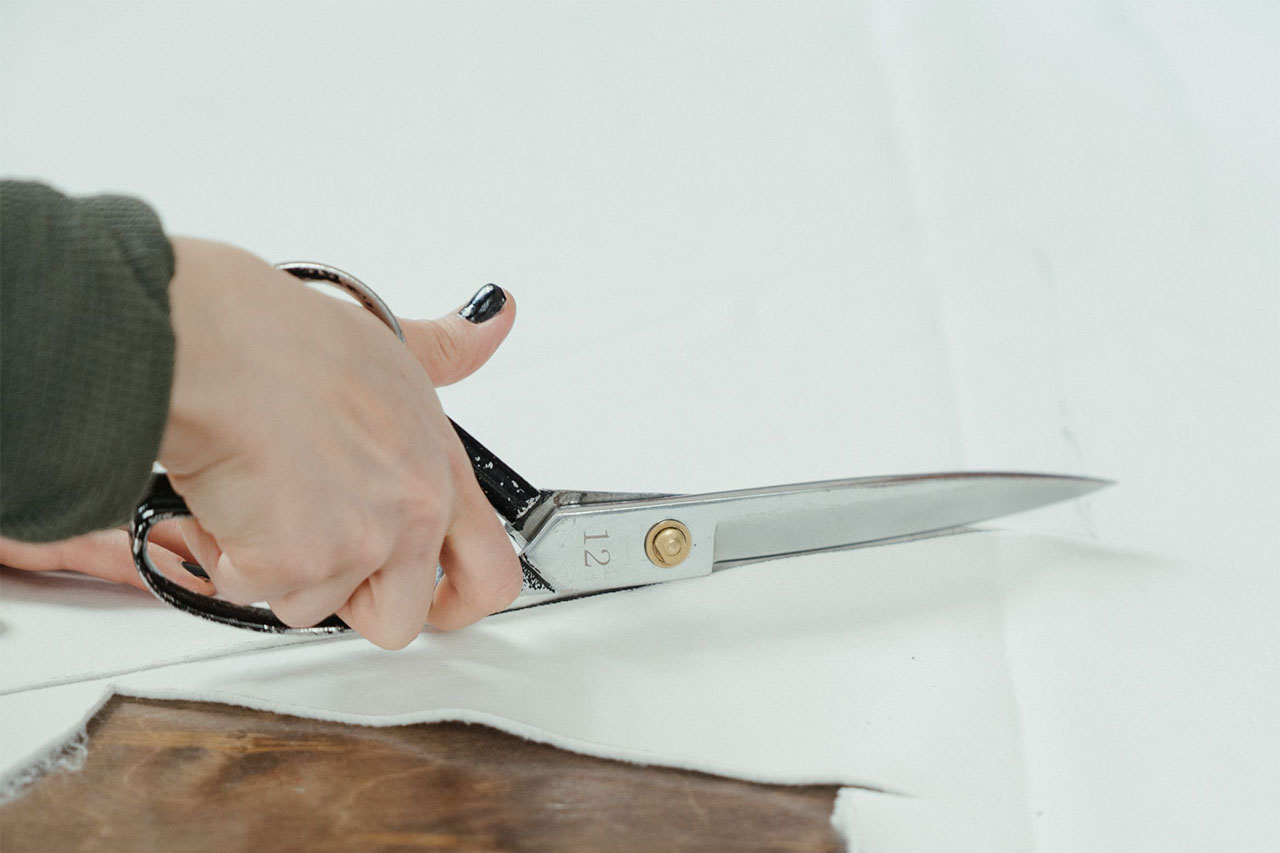
Cut-and-sew means a cover is cut and sewn to dimensions you supply rather than pulled from a stock size run. You send measurements, choose a fabric, and a cover is made for that specific mattress or cushion. It’s the answer when the furniture is an odd size, a discontinued size, or not a futon at all.
Most people arrive at custom after a stock cover has already disappointed them. It’s worth understanding the option before that step rather than after.
When custom is the right call
The mattress is between sizes. Measurements that fall two or more inches outside a standard size in width or length will not be absorbed by a stock cover. Foam and innerspring mattresses in particular won’t compress into a smaller cover.
The furniture isn’t a standard futon. Daybed pads, window-seat cushions, bench pads, shikibutons, Japanese-style floor mattresses, built-in banquettes, camper and van conversions, boat berths, and antique or imported frames all fall outside the sizes anyone stocks.
The mattress is unusually thick or thin. Thickness has less tolerance than width and length. A mattress well outside the common range needs a cover cut for it.
The cushion is shaped. Trapezoidal chair pads, tapered wedges, L-shaped sectional cushions, and anything with a curve can’t be served by a rectangular cover.
You want a fabric that isn’t offered in your size. Sometimes the size exists and the fabric exists, just not together. Custom bridges that.
You’re matching existing furniture. Recovering a set — futon plus chair plus ottoman, or a futon plus window seat — in one fabric usually requires at least one custom piece.
What the process actually involves
You measure. Width, length, and thickness at minimum, plus additional dimensions and a sketch for anything non-rectangular. This is the step that determines whether the finished cover fits, and it’s the one step nobody else can do for you. How to measure a futon for a cover covers exactly where to put the tape.
You choose a fabric. Anything available by the yard can generally be cut into a custom cover. Order swatches first — see below.
You specify the details. Zipper placement, whether you want piping, and any construction preference.
The workroom cuts and sews. Panels are cut to your dimensions with appropriate seam and ease allowance, the zipper is set, and the cover is assembled and finished.
It ships. Custom pieces take longer than stock. Build that into your planning if the room has a deadline.
Send measurements, not guesses
The single most common problem with custom orders is measurements taken from memory, from the frame, or from the old cover.
Report the finished mattress dimensions — not the fabric you think is needed, not the dimensions plus your own added allowance. Seam and ease allowance is calculated by the workroom based on fabric weight, stretch, and construction. Adding your own on top produces a cover that’s too big, which is harder to fix than one that’s too small.
For anything shaped, draw it. A rough sketch on paper with dimensions written on each edge, photographed with your phone, communicates more in five seconds than a paragraph of description. Include a photo of the actual piece too, showing how it sits on the frame.
Note the mattress type as well. Cotton fill, cotton-foam, all-foam, and innerspring behave differently under a snug cover, and that affects how the cover should be cut.
Order swatches before you commit
On a custom order this matters more than on a stock one, because custom work generally isn’t returnable — the cover exists only for your furniture and can’t go back into inventory.
Screens misrepresent two things badly: color and hand. Monitors vary in calibration, product photography is lit to flatter, and no photograph conveys whether a fabric is crisp, soft, slubby, or plush. A swatch in your own room, in daylight and again under your evening lighting, settles both questions for the cost of shipping a fabric square. Why to order swatches goes into what to look for once they arrive.
Order two or three candidates rather than one. Comparison is more informative than judging a single sample in isolation.
Choosing fabric for a custom cover
The fabric choice matters more on custom than on stock, because you’re committing to a made-to-order piece.
Weight and durability. Heavier, tighter weaves hold up better on daily-use seating. A lightweight decorative fabric that’s lovely on a guest-room piece will wear through on a sofa that’s sat on every evening.
Stretch. Fabrics with give install more easily and forgive small measurement errors. Rigid fabrics demand precision.
Pattern and repeat. A large-scale print on a large cover needs to be positioned deliberately, which uses more yardage than a solid or small-scale pattern. If the pattern’s placement matters to you — centered on the seat deck, for instance — say so on the order rather than assuming.
Directional fabrics. Napped fabrics like microsuede, chenille, and velvet look different depending on which way the pile runs, and stripes and one-way prints must all run the same direction. These constraints consume extra fabric.
Custom versus making it yourself
If you sew, a futon cover is a large but not complicated project: essentially a fabric box with a zipper. The obstacles are physical rather than technical — a full-size cover involves several yards of heavy fabric that has to be handled through a domestic machine, and long straight seams under that much weight are harder to keep true than they look. Setting a long zipper into thick fabric is the step that most often goes wrong.
Buying fabric by the yard and sewing it yourself trades money for time and a fair amount of floor space. Cut-and-sew trades the opposite way. Neither is the correct answer universally; it depends on whether you already own a machine that can handle upholstery-weight fabric and whether you enjoy the work.
If you’re weighing the DIY route, work out the yardage first — it’s usually more than people expect.
What to have ready before you order
- Width, length, and thickness, measured on the bare mattress
- A sketch with dimensions for any non-rectangular shape
- Photos of the piece in place
- Mattress construction type
- Your fabric choice, confirmed against a physical swatch
- Piping preference
- Any deadline you’re working to
Having all of this in one message shortens the back-and-forth considerably. If you’re not sure whether your piece is a candidate, get in touch with the measurements and a photo and ask.
Start with the cut-and-sew service, or check the stock sizes in futon covers first — if a standard size fits, it’s faster and cheaper.
Frequently asked questions
Can you make a cover for something that isn’t a futon? Generally yes. Daybed pads, bench cushions, window seats, and shaped cushions are all common cut-and-sew work. Send measurements and a photo to confirm.
Do I add seam allowance to my measurements? No. Send the finished mattress dimensions and let the workroom calculate allowance.
Are custom covers returnable? Custom work is made for your specific piece and generally can’t be returned, which is why swatches and careful measuring matter so much.
Can I supply my own fabric? Ask. Whether customer-supplied material is accepted depends on the fabric’s weight and suitability.
How long does a custom cover take? Longer than a stock cover, since it’s made after you order rather than pulled from a shelf. Ask for the current lead time when you order if you’re working to a deadline.
Can you match a fabric I already have? Send a swatch or a clear photo alongside a ruler. Exact matching of a discontinued fabric usually isn’t possible, but close coordination often is.