
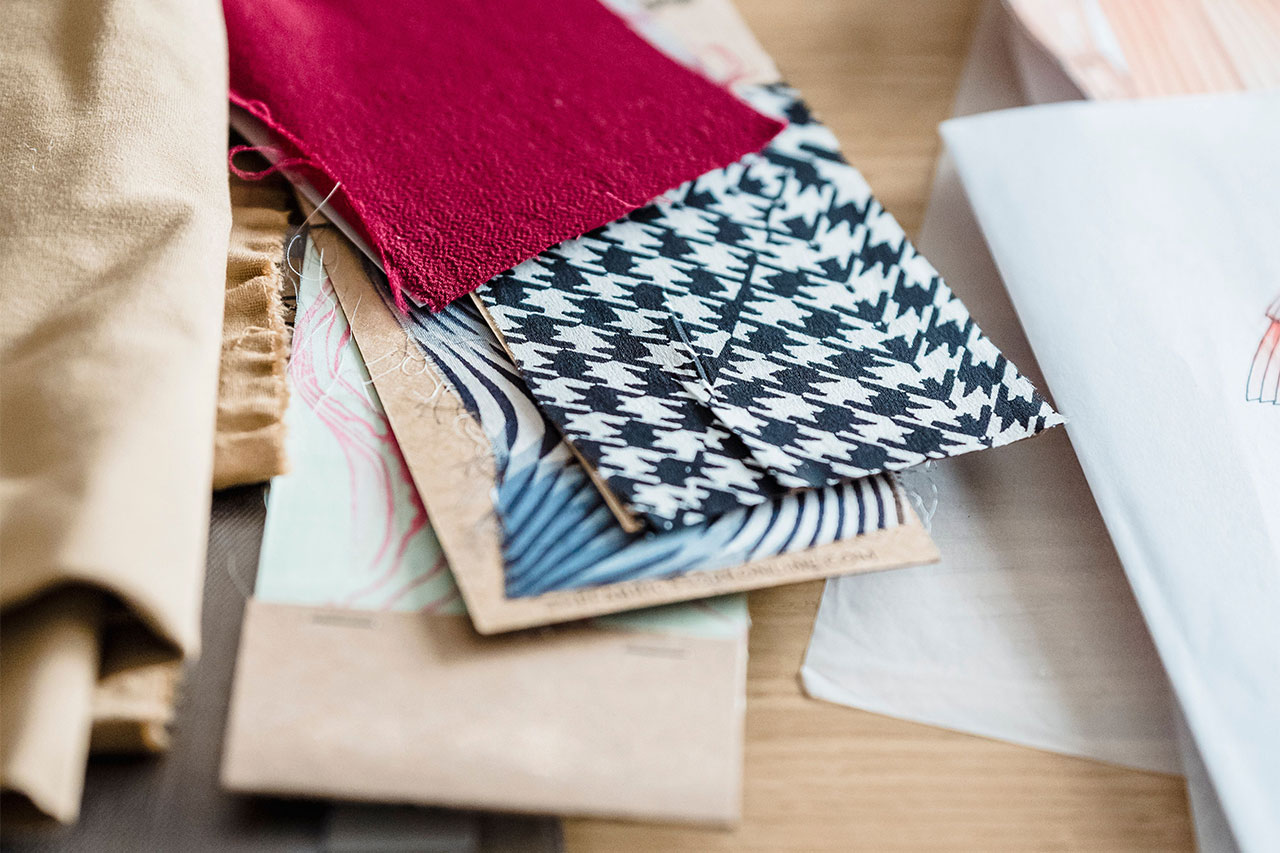
Order swatches because a screen can’t show you two of the three things that determine whether you’ll like a fabric: its true color in your room’s light, and how it feels. Photographs handle pattern well and those two badly. A swatch resolves both for the cost of postage, before you commit to a cover you may not be able to return.
This is the least glamorous step in buying a cover and the one that prevents the most disappointment.
What a screen gets wrong
Color. Every display renders color differently. Panel technology, calibration, brightness, night-mode color shifting, and the browser itself all move the result. A grey that reads warm on one phone reads blue on another. Product photography compounds this: studio lighting is chosen to make fabric look good, and it rarely matches a north-facing living room in February.
Hand. No photograph tells you whether a fabric is crisp or soft, smooth or slubby, cool or warm to the touch, dense or open. For something you sit on and sleep on, hand may matter more than color.
Scale. A product photo crops to show pattern clearly, which distorts your sense of size. A print that looks like a small allover on screen may have a repeat the size of a dinner plate. On a large cover, that’s a different piece of furniture.
Sheen. Pile fabrics — microsuede, chenille, velvet — shift in appearance as light angle changes. A still photograph freezes one angle. In a real room, the fabric changes all day.
What to actually do when the swatches arrive
Don’t glance at them on the kitchen counter and decide. Spend a day.
View them in the actual room. Take the swatch to the futon and lay it where the cover will be. Room color, floor color, and the color of light bouncing off the walls all change how the fabric reads.
Check it at three times of day. Morning daylight, afternoon, and under your evening artificial light. Fabrics that look identical at noon can diverge sharply under warm bulbs. If your evening lighting is what you use most, weight that view heaviest.
Hold it against what stays. Your rug, curtains, the wall, the wood tone of the frame, the sofa across the room. A fabric is never judged in isolation once it’s installed.
Handle it. Rub it between your fingers. Scratch it lightly with a fingernail. Fold it and see whether the crease stays. Press it against your forearm — that tells you what it will feel like against skin when someone sleeps on it.
Check the reverse and the weave. Hold it to a light. A tight, dense weave with little light showing through will outlast an open one on a piece that gets daily use.
Live with it for a few days. Leave the swatches draped over the futon. First impressions and third-day impressions frequently differ, and the third-day impression is the one that predicts how you’ll feel in a year.
Order more than one
Comparison tells you more than isolation. Three swatches side by side sort themselves quickly; one swatch alone is judged against an imagined alternative, which is a bad reference.
A good set to request:
- The fabric you think you want
- One a shade lighter or darker in the same family
- One in a different texture at a similar color — a flat weave against a pile, for example
That third one is often the surprise. People arrive convinced they want a smooth fabric and choose a textured one once both are in hand, or the reverse.
Choosing by use, not just by looks
Once the swatches are in front of you, apply the practical filters.
Daily-use seating wants a dense, tightly woven, hard-wearing fabric. Loose weaves snag and pill on furniture that’s sat on every evening.
Guest rooms and occasional use open the field considerably. A fabric too delicate for a daily sofa is perfectly sensible on a piece used a dozen times a year.
Pets push you toward tight weaves with no loops for claws to catch, and toward mid-tone colors and subtle textures that hide hair. Fabrics with a visible loop structure are the worst case for cats.
Kids push you toward washability and pattern. Solid light colors show everything; a small-scale pattern is far more forgiving.
Direct sun fades everything eventually, and darker and more saturated colors show fading soonest because the change is larger in absolute terms. If the futon sits in a sunny window, consider that in the choice.
Sleeping surface raises the priority of hand. If someone sleeps directly on the cover regularly, natural fibers generally feel better against skin than synthetics.
Color decisions that hold up
Light colors open a small room and show soil.
Dark colors hide soil and show pet hair, dust, and lint.
Mid-tones are the practical compromise and the reason greys, taupes, and mid-blues sell as heavily as they do.
Texture forgives more than color. A textured mid-tone hides more day-to-day mess than a flat fabric in any color, because the surface breaks up light and disguises marks.
If you’re worried about committing to a strong color on a large surface, invert the plan: choose a restrained cover and put the color in throw pillows, which cost less and can be changed seasonally.
Swatches matter most on custom orders
For a stock cover in a stock size, the stakes are moderate — there’s a returns process if it’s genuinely wrong.
For custom cut-and-sew work, the cover is made for your specific piece and generally can’t go back. Same for fabric bought by the yard. In both cases, the swatch is the only opportunity to check the fabric before it becomes non-returnable. Skipping it to save a few days is a poor trade.
A workflow that avoids rework
- Measure the mattress — here’s how — so you know whether you need a stock size or custom.
- Narrow to three fabric candidates on screen.
- Order swatches of all three.
- Evaluate over several days, in your room, at multiple times of day.
- Check the care requirements of your favorite against how you actually live — washing routines differ meaningfully by fiber.
- Order the cover.
Steps 3 and 4 add a few days. They’re the difference between a cover you’re happy with for years and one you tolerate.
Start browsing futon covers, and if you’re going custom, how cut-and-sew works covers what to send with the order.
Frequently asked questions
How many swatches should I order? Two or three. Enough to compare, few enough to decide.
Are fabric swatches free? Most swatches are free; you only pay for shipping.
How big is a swatch? Small — enough to judge color, hand, and weave, though not enough to judge a large-scale pattern’s full repeat. For big prints, ask for a larger sample or study the repeat dimension on the product page.
Will the cover match the swatch exactly? Very closely, but fabric is dyed in lots and small variation between lots is normal in the textile industry. Order all fabric for a project at once so it comes from the same lot.
Can I keep the swatches? Yes, and you should. Keep them with your measurements. They’re useful later for matching pillows, curtains, or a second cover.